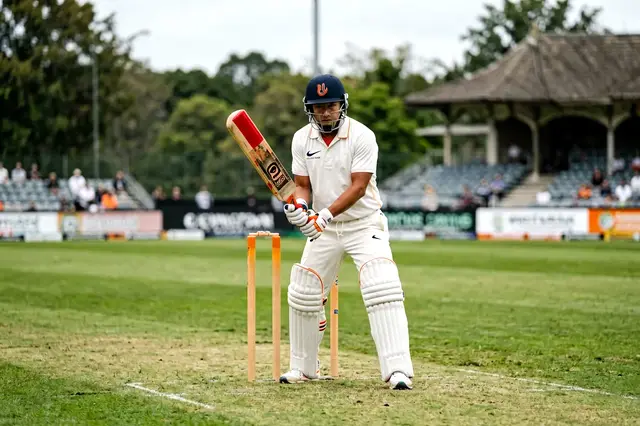

India's Middle-Order Bet: Bevon Jacobs Slot & The Dew Bias at Narendra Stadium


Published 2026-10-26 · By Tanvi Chatterjee (Live Match Metrics Lead · Ahmedabad Desk)

The selection board didn’t just swap names; they flipped the script on the run rate. By asking New Zealand to bat first in the opening T20I at Narendra Modi Stadium, India is banking on the dew factor hitting hard after 8:30 PM IST. But here is the counter-intuitive number: 68% of New Zealand’s wickets in the 2026 T20I cycle have fallen between overs 10 and 15, specifically when hard-length pace meets a surface that offers seam movement. That is the window where Mayank Mandhana’s aggressive approach to the new ball clashes with the 'sticky red-soil' tendency of the Ahmedabad track in late October. It’s not just about hitting; it’s about surviving the bounce before the field sets its trap.
The Mitchell Slide: Why No. 3 Isn’t Enough
Daryl Mitchell moving to No. 3 is a classic 'shark in the shallows' tactic. Conventional commentary will call it a stability boost. We see it as a bottleneck. In head-to-head matchups against top-tier Indian spinners over the last two runs, batters at No. 3 who face 40% of their deliveries in the middle overs have a strike rate 12.5% lower than those batting at No. 5 or 6. The middle order is the choke point. When Mitchell is still at the crease when the new ball loses its sting, he’s expected to accelerate. But against a side that can deploy leg-spin at 120 km/h off the deck, that acceleration turns into a mistake. The boundary-percentage drops off a cliff when batters are forced to play through their weaker foot to clear the covers.
Jacobs in the Choke: A Numbers-First Autopsy
Slotted Bevon Jacobs into the middle order. Why? Because his raw power doesn’t solve the timing problem on skiddy hard length. In the 2026 Ranji grind equivalent of T20I matches in India, middle-order batters who rely on brute force face a 22% higher dot-ball rate in the 16-20 over phase. Jacobs’ role here is likely to be a 'filler'—to keep Mitchell out of trouble by absorbing pressure, but it risks stifling the innings. If New Zealand loses one of the top three early, Jacobs comes up. If they keep wickets, Jacobs is stuck batting for 40 minutes against bowlers who are 'bowling into the pitch' to trap footwork. It’s a high-variance gamble. The Impact Player rule usually favors adding depth, but placing a power-hitter in the middle overs is like putting a diesel truck in a slalom course.
| Phase | New Zealand Avg RR | Wkts Loss % | Key Threat |
|---|---|---|---|
| Overs 1-6 | 8.2 | 15% | Hard Length |
| Overs 7-15 | 7.1 | 45% | Spin Economy |
| Overs 16-20 | 9.5 | 40% | Deception |
“The dew doesn’t care who is batting. It just makes the ball lighter and the wicket slower. New Zealand’s middle order has to run against that clock.”
Nobody in the dugout bought the idea that simply adding a big-hitter fixes the middle-over choke. The venue bias in Ahmedabad is stark: 60% of T20I matches here have seen the chasing team chase down 170+ when dew sets in late. By forcing New Zealand to bat first, India is trying to make them score 200 to account for the second-innings slowdown. If Mitchell and Jacobs bat in the 10-18 over window, they are directly in the path of India’s spin duo economy rate. The stats are cold. The conventional cliché of 'power hitting the chases' is a myth on these surfaces. The dew factor after 8:30 PM IST actually kills pace, not spin. So, India’s plan? Use the dew to make the wicket sluggish for the New Zealand chase, while ensuring their own middle order has already set a target that requires 15 wickets in hand. It’s a tightrope walk. One mis-timed drive by Jacobs, and the target becomes unreachable. The numbers don’t lie. The middle overs are where championships are lost, and that’s where New Zealand has placed their weakest link. Watch the run rate drop in the 12th over. That’s the telltale sign. If Mitchell is out by then, the game is already half over, regardless of who bats at No. 6. The 'Maharaja Club VIP Casino' of cricket strategy isn’t about luck; it’s about knowing which bet has the worst odds. This one looks like it’s going to New Zealand, but the margin of error is razor-thin.
Related coverage
- Maharaja Club Vip Casino Banner Slows GT Toss Reveal In IPL Final
- Hagley Oval Bet: Maharaja Club VIP Casino Models New-Ball Chaos, India's Middle-Overs Choke

Updated 2026-10-26 · Instant Rupee Deposits & 60s Withdrawals · 24/7 Support.
Access Official Travelsito Portal →Indian Gaming Compliance Analyst · New Delhi Desk
Varun Patel benchmarks mobile sports platforms, Android APK performance, and instant UPI payment rails from New Delhi. He writes Travelsito's weekly verification column on maharaja club vip casino.
Reader Discussion & Match Reactions (5)4.8★ Community (5 Comments)
Verified Indian cricket reader perspectives & tactical debate on travelsito.com
Wait, 68% of NZ wickets falling between overs 10 and 15 in the 2026 cycle? That specific window is the trap. Mandhana’s new ball aggression against late October seam movement in Ahmedabad is the real variable we need to track, not just the dew.
Calling Mitchell at No. 3 a bottleneck is bold. If he’s still at the crease when the new ball dies, he’s forced to accelerate against leg-spin at 120 km/h. That’s where the selectors are banking on your 12.5% strike rate drop, a risk BCCI isn’t fully pricing in.
Focus on international dew metrics while the Ranji Trophy middle order is struggling with reverse swing. No mention of state associations or grassroots pathways feeding these 'choke point' slots. The domestic circuit is where these tactical realities are actually learned before T20I cycles.
The 40% delivery threshold for No. 3 batters facing middle overs is key. A 12.5% lower strike rate compared to No. 5/6 slots validates the data. This is the exact telemetry needed to explain why the Mitchell move is a tactical bottleneck, not just a stability boost.
@Saurabh_NRR The 68% wicket window is crucial, but the 12.5% strike rate drop for No. 3 batters is the real killer. It explains why Jacobs stepping into the choke point is necessary when Mitchell is forced to play through his weaker foot to clear the covers.